Introduction
Painting or staining exterior wood too soon after it gets wet can create problems that do not always appear immediately.
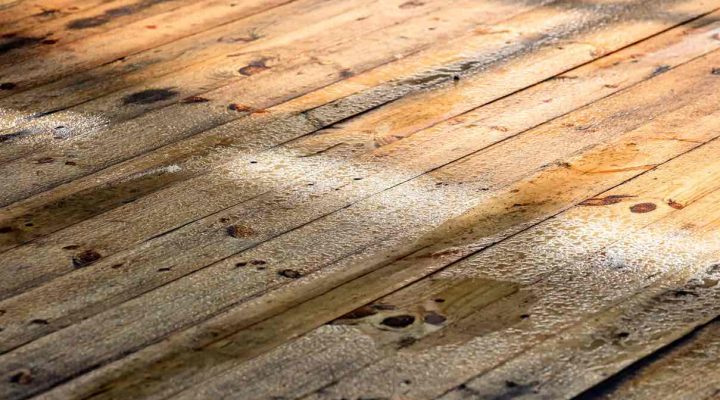
The surface may look dry. It may feel dry to the touch. The sun may even be shining.
But moisture can still remain inside the wood.
That matters because paint and stain need suitable conditions to bond or penetrate properly. If moisture is trapped in the substrate, the coating may not perform the way it should.
This is especially important in Northwest Arkansas, where exterior wood can experience rain, humidity, morning dew, shade, and changing temperatures throughout the painting season. Decks, fences, wood siding, fascia, trim, railings, and other exterior wood surfaces can all dry at different rates.
At Schneider Painting, we do not rely only on how many hours have passed since the last rain. We look at the actual condition of the surface, the weather, the location of the wood, and the requirements of the product being applied.
Here is what homeowners should know before painting or staining exterior wood.
1. Why Does Wood Moisture Matter Before Painting or Staining?
Wood naturally absorbs and releases moisture.
That is normal.
The problem occurs when a coating is applied while the wood contains more moisture than the product or surface condition can tolerate.
Paint generally needs a dry, stable surface for good adhesion. If moisture is moving outward through the wood after the coating is applied, it can put pressure on the paint film.
Stain can behave differently depending on the product. Some stains are designed to penetrate into the wood rather than form the same type of surface film as paint.
If the wood is already holding significant moisture, that penetration may be limited or uneven.
The result can include poor bonding, blotchy appearance, extended drying time, or premature failure.
This is why professional exterior painting should include an evaluation of surface conditions before coating begins.
2. Wood Can Look Dry Before It Is Actually Ready
One of the easiest mistakes is judging wood only by appearance.
A deck can look dry a few hours after rain.
Fence boards may no longer have visible water on them.
Trim may feel dry when you touch the surface.
That does not necessarily mean the wood is ready for paint or stain.
Moisture can remain below the surface, especially in thicker boards, shaded areas, joints, end grain, and sections with limited airflow.
The top of a board may dry quickly while the underside or interior remains damp.
This is why visual inspection is useful but should not always be the only test.
When conditions are questionable, a moisture meter can provide more objective information.
3. Recent Rain Can Delay Exterior Painting
After rain, exterior surfaces need enough time to dry before coating.
There is no single waiting period that applies to every situation.
A light shower on a warm, breezy morning may dry differently from several days of steady rainfall.
Other factors include:
- Air temperature
- Relative humidity
- Direct sunlight
- Shade
- Air movement
- Wood thickness
- Wood species
- Orientation of the surface
- Previous coatings
A south-facing railing in full sun may dry much faster than a north-facing section of wood siding under heavy trees.
That is why choosing an arbitrary number of hours can be misleading.
The condition of the wood matters more than the clock alone.
4. Pressure-Washed Wood Needs Time to Dry
Pressure washing is often part of exterior cleaning and preparation.
It can remove dirt, chalk, loose contaminants, and other buildup when done properly.
It also introduces water directly onto the surface.
Wood can absorb some of that moisture.
Painting immediately after washing can create problems even if the surface begins looking dry.
The drying time depends on weather, wood condition, and how much moisture was introduced.
Schneider Painting already explains this topic in more detail in how long to wait after pressure washing before painting.
The important point is simple.
Cleaning and coating should be treated as separate steps. The wood needs an appropriate drying period between them.
5. Humidity Can Slow the Drying Process
Northwest Arkansas humidity can make drying less predictable.
When the surrounding air already contains a lot of moisture, water leaves wood more slowly.
A surface may remain damp longer even when there has been no additional rain.
This is especially noticeable during warm, humid periods with limited wind.
Homeowners may assume high temperatures automatically mean fast drying.
That is not always true.
Heat can help evaporation, but high humidity can slow it down. Shade can slow it further.
That combination is one reason exterior painting schedules sometimes need to change even when the forecast looks generally dry.
Schneider Painting’s guide to Arkansas weather and exterior paint failure provides more detail about how regional conditions affect exterior coatings.
6. Morning Dew Can Make an Otherwise Dry Surface Too Wet
Rain is not the only moisture source painters need to watch.
Morning dew can leave exterior wood damp even after several rain-free days.
This is common when overnight temperatures drop and moisture condenses on cooler surfaces.
Deck railings, siding, fascia, fences, and exposed trim may all collect dew.
A painter arriving early in the morning may find that yesterday’s dry surface is temporarily damp again.
Coating should wait until that moisture has evaporated and the surface meets the product requirements.
This is one reason the best time to begin exterior painting can vary from day to day.
Starting earlier is not always better.
7. Shade Can Keep Wood Wet Much Longer
Wood under heavy tree cover or on the shaded side of a home often dries more slowly.
Direct sunlight warms the surface and encourages evaporation.
Shaded wood may receive little of that benefit.
Airflow may also be restricted by landscaping, fences, neighboring structures, or dense vegetation.
This can create noticeable differences around one property.
A deck may be ready in one area while another section remains damp.
The same can happen with siding and trim.
Homeowners should be particularly cautious about assuming the entire exterior is ready simply because the sunniest section feels dry.
If your property has heavy shade, especially in areas such as Bella Vista and other wooded Northwest Arkansas communities, the drying conditions deserve closer attention.
8. Horizontal Wood Surfaces Often Hold Moisture Longer
Horizontal surfaces receive more direct water exposure than vertical ones.
Deck boards, stair treads, handrail tops, porch floors, and horizontal trim surfaces can all stay wet longer.
Water may also collect in small cracks, joints, fastener holes, or low spots.
Vertical siding tends to shed water more readily.
That means a deck and the nearby siding may not be ready for coating at the same time even though they were exposed to the same rain.
This matters when planning deck and wood staining services.
Exterior wood should be evaluated by surface and location rather than treated as one uniform material.
9. End Grain Can Absorb More Moisture
The ends of wood boards often absorb moisture more readily than the face of the board.
This is because the internal grain structure is more exposed.
End grain can be found around:
- Trim joints
- Fence boards
- Deck boards
- Railings
- Siding cuts
- Fascia
- Wood repairs
These areas can remain damp even when the broad face of the board appears dry.
They also deserve careful coating because exposed end grain can become a point where moisture repeatedly enters the wood.
Good surface preparation considers these details instead of looking only at large visible areas.
10. A Moisture Meter Can Help Remove the Guesswork
A moisture meter is one of the most useful tools for evaluating questionable wood.
The tool estimates the amount of moisture in the material.
This provides better information than touching the surface and deciding that it “feels dry.”
Different meters operate differently, and readings can be influenced by wood species and other factors.
The acceptable moisture level also depends on the coating manufacturer and the substrate.
There is not one percentage that should automatically be applied to every paint or stain product.
The product’s technical requirements should guide the decision.
A professional painter can compare the moisture reading with the requirements for the coating being used.
11. Why There Is No Universal Moisture Percentage
Homeowners sometimes search for one exact moisture number that guarantees exterior wood is ready to paint.
That can oversimplify the issue.
Different manufacturers may provide different maximum moisture recommendations.
Paint, solid-color stain, semi-transparent stain, and other coatings do not all behave identically.
Wood species and environmental conditions can also influence readings.
That is why the safest approach is to follow the coating manufacturer’s instructions and evaluate the actual surface.
A moisture meter is useful because it provides data.
The product specification explains what that data means for the coating you intend to use.
12. What Happens If You Paint Wet Wood?
Painting wood that contains excessive moisture can create several problems.
Poor adhesion is one of the most common concerns.
The paint may not develop a strong bond to the substrate.
As moisture moves through the wood and tries to escape, it can also contribute to blistering or peeling.
Other possible problems include:
- Uneven drying
- Soft coating
- Discoloration
- Bubbling
- Early coating failure
- Moisture trapped beneath the film
The exact failure depends on the surface, moisture source, paint, preparation, and environmental conditions.
Schneider Painting’s article about preventing paint from blistering in humid weather covers another related moisture issue.
13. Wet Wood Can Also Affect Stain
Stain does not necessarily behave the same way as paint.
Many wood stains are intended to penetrate the surface.
If the pores of the wood are already holding significant moisture, stain may not penetrate evenly.
You may see areas that remain lighter, darker, shinier, or more blotchy than surrounding sections.
The stain may also take longer to dry.
Applying additional product to compensate can make the appearance worse if the wood is not properly prepared.
When staining decks, fences, and other wood surfaces, proper moisture conditions are just as important as choosing the stain color.
The wood needs to be ready to receive the product.
14. New Pressure-Treated Lumber Can Hold Significant Moisture
New decks, fences, and exterior repairs sometimes use pressure-treated lumber.
Fresh pressure-treated wood can contain substantial moisture from the treatment process.
Painting or staining it immediately after installation may not be appropriate.
Drying time can vary significantly.
Weather, lumber thickness, storage conditions, exposure, and the actual moisture content all affect readiness.
Instead of relying on a fixed number of weeks or months, evaluate the wood.
A moisture meter can be particularly useful here.
The coating manufacturer’s requirements should still be followed.
Waiting too little can create performance problems. Waiting unnecessarily long can leave the wood exposed without protection.
The goal is to coat it when the wood is actually ready.
15. Old Wood Can Hold Moisture Too
Older wood is not automatically dry wood.
Weathered boards may absorb water quickly if the previous coating has deteriorated.
Cracks, open joints, and exposed end grain can allow moisture deeper into the material.
Soft or deteriorated areas may also indicate a more serious problem.
If wood remains unusually wet long after surrounding areas have dried, investigate why.
Possible causes include:
- Poor drainage
- Repeated roof runoff
- Failed gutters
- Plumbing leaks
- Vegetation contact
- Ground contact
- Rot or deterioration
- Limited airflow
Painting is not the solution to an active moisture source.
The cause should be corrected first.
16. Peeling Existing Paint Can Be a Moisture Warning
If paint is already peeling from wood, moisture may be one possible contributor.
It is not the only cause.
Poor preparation, age, incompatible coatings, excessive paint buildup, and surface contamination can also lead to peeling.
Still, repeated peeling in the same location deserves investigation.
Look at what is around the area.
Is there a gutter overhead?
Does water collect nearby?
Is landscaping keeping the surface damp?
Is the wood exposed at a joint?
Does the area receive very little sunlight?
The coating failure may be telling you something about the environment around the substrate.
Before repainting, read more about exterior paint preparation.
17. Chalking and Moisture Are Different Problems
A dry-looking exterior surface may still have other preparation issues.
One common example is chalking.
Chalking creates a powdery residue as an older coating weathers.
This is different from moisture, but both conditions affect whether the surface is ready to paint.
A wall can be dry and still not be properly prepared if it is covered in loose chalk.
Likewise, a perfectly clean piece of wood is not ready if it is still too wet.
Exterior preparation requires looking at the entire surface condition.
Schneider Painting’s existing guide to painting over chalking paint explains why surface cleanliness and stability matter in addition to moisture.
18. Do Not Use Heat to Force Wood Dry Too Quickly
Homeowners may be tempted to speed things up.
Using excessive heat or trying to artificially force exterior wood dry is usually not a good substitute for normal drying conditions.
Rapid surface drying does not always mean the moisture inside the wood has equalized.
The wood can also expand and contract as moisture levels change.
A better approach is to allow suitable weather, airflow, and time to do the work, then verify the condition before coating.
Painting schedules should adapt to the material rather than forcing the material to fit the schedule.
19. Weather Forecasts Matter Before and After Application
It is not enough for the wood to be dry at the exact moment paint or stain goes on.
The coating also needs appropriate conditions while it dries and cures.
If rain is expected shortly after application, the project may need to wait.
High humidity, falling temperatures, direct sun, or excessive heat can also affect the application window.
Professional painters consider both current conditions and the forecast.
Schneider Painting’s guide to the best temperature range for exterior painting in Arkansas is useful when evaluating these broader weather conditions.
20. Should You Paint After Several Dry Days?
Several rain-free days are a good sign, but they do not guarantee that every exterior wood surface is ready.
A shaded deck board may still contain more moisture than an exposed railing.
New pressure-treated wood can still be wet even after a long dry stretch.
A board affected by a leak may remain damp after the rest of the house dries.
Treat dry weather as one part of the evaluation.
Look at the actual substrate.
When needed, measure moisture instead of guessing.
21. How Long Should a Deck Dry Before Staining?
There is no universal answer.
A deck that receives strong sun and airflow may dry relatively quickly after a light rain.
A heavily shaded deck may take substantially longer.
Pressure washing can introduce more moisture than a brief shower.
Wood species, board condition, previous coatings, and humidity also influence the process.
The stain manufacturer’s instructions should guide the final decision.
If you are already watching your deck for maintenance signs, Schneider Painting’s guide to when a deck needs to be restained can help you evaluate the overall condition of the finish.
22. Fences Can Dry Unevenly Too
Fence boards can have surprising differences in moisture.
One side may receive full afternoon sun.
The opposite side may remain shaded by the fence itself.
Vegetation may touch certain sections.
The bottom of boards may stay damp longer because they are closer to the ground.
Sprinklers can repeatedly wet one area.
This means fence preparation should include more than checking the easiest section.
Inspect both sides and several locations along the fence.
If stain is applied when some boards are dry and others are still damp, the finished appearance can become inconsistent.
23. Wood Siding Requires Careful Moisture Evaluation
Wood siding can experience moisture from both outside and inside the building assembly.
Rain is only one possible source.
Failed caulk, roof problems, gutter issues, plumbing leaks, and interior moisture movement can all contribute.
Repeated paint failure on wood siding deserves investigation.
If moisture is entering behind the siding, repainting the front surface alone may not solve the problem.
The substrate needs to be sound and reasonably dry before coating.
A good exterior painter should recognize when visible paint failure may involve a condition beyond ordinary painting preparation.
24. Proper Preparation Still Matters After the Wood Dries
Dry wood is not automatically ready to paint.
Once moisture conditions are acceptable, other preparation may still be needed.
That can include:
- Cleaning
- Scraping loose paint
- Sanding rough edges
- Removing unstable coatings
- Repairing minor defects
- Addressing failed caulk
- Priming bare wood
- Removing dust
- Protecting surrounding surfaces
Moisture is one part of surface readiness.
Preparation is the complete process.
Applying premium paint to dry but dirty wood can still lead to poor performance.
The same is true of dry wood covered with loose peeling paint.
25. When Should You Call a Professional Painter?
Homeowners can often identify obvious wet conditions themselves.
If it just rained, the deck probably needs more drying time.
If the siding is covered in morning dew, painting should wait.
The situation becomes more complicated when surfaces repeatedly fail, different areas dry at different rates, or the wood looks dry but moisture is still suspected.
A professional painter can evaluate:
- Surface condition
- Previous coatings
- Moisture exposure
- Preparation requirements
- Weather conditions
- Product compatibility
- Application timing
That evaluation can prevent a project from starting under conditions that create avoidable coating problems.
Why Homeowners Choose Schneider Painting
Schneider Painting serves homeowners throughout Northwest Arkansas, including Fayetteville, Springdale, Rogers, Bentonville, Bella Vista, and surrounding communities.
Exterior painting and staining require good timing.
Our crews pay attention to the condition of the surface, weather, preparation, and product requirements before applying a finish.
We do not want to coat wood simply because the project is on the calendar.
If the surface needs more time to dry, that matters. If an area shows unusual moisture or deterioration, homeowners should know before new paint or stain covers it.
Preparation, communication, and clean job sites are central to how we approach each project.
Our goal is to apply coatings under conditions that give them the best opportunity to perform properly and provide long-lasting results.
Frequently Asked Questions
How can I tell if wood is too wet to paint?
Visible moisture, recent rain, dampness, or condensation are obvious warning signs. When the surface looks dry but conditions are uncertain, a moisture meter can provide a more objective reading. The acceptable level should be compared with the coating manufacturer’s requirements.
How long after rain should I wait before painting wood?
There is no universal waiting period. Drying depends on rainfall amount, humidity, temperature, sunlight, airflow, wood type, thickness, and exposure. Evaluate the actual wood rather than relying only on a fixed number of hours.
Can I stain a deck if it feels dry?
Possibly, but touch alone does not confirm internal moisture levels. A deck may feel dry at the surface while still holding moisture within the boards. Product requirements and, when appropriate, moisture-meter readings provide better guidance.
What happens if I paint wood that is still wet?
Excess moisture can contribute to poor adhesion, peeling, blistering, uneven drying, and other coating problems. The exact failure depends on the substrate and product.
Does pressure-treated wood need to dry before staining?
Yes. New pressure-treated wood can contain substantial moisture. Instead of following one fixed waiting period, evaluate the lumber and follow the stain manufacturer’s moisture requirements.
Can Schneider Painting check exterior wood before painting or staining?
Yes. Schneider Painting evaluates visible surface conditions, preparation needs, and weather factors before exterior painting and staining projects throughout Northwest Arkansas.
Conclusion
Exterior wood does not need to look wet to contain too much moisture for painting or staining.
Recent rain, pressure washing, morning dew, humidity, shade, new pressure-treated lumber, leaks, and poor airflow can all keep moisture in the wood longer than homeowners expect.
That is why a fixed waiting period is not always enough.
Look at the weather. Consider the location of the surface. Pay attention to shade and airflow. Evaluate the wood itself. When conditions are uncertain, moisture testing can provide useful information.
Most importantly, follow the requirements of the paint or stain being applied.
Waiting until the wood is properly prepared and sufficiently dry is much easier than repairing a coating that fails because the project started too soon.
If you are planning exterior painting, deck staining, fence staining, or another wood-finishing project in Northwest Arkansas, contact Schneider Painting to schedule a painting consultation.