Introduction
Choosing an interior paint color is only half of the decision.
You also need to choose the finish.
Flat, matte, eggshell, satin, and semi-gloss paints can look very different even when they are mixed in the exact same color. They also behave differently when it comes to cleaning, light reflection, moisture, fingerprints, and everyday wear.
That matters in a busy home.
A guest bedroom may see very little contact with the walls. A hallway may get bumped by backpacks, hands, pets, and furniture every day. Kitchen walls may need regular cleaning. Bathrooms experience more humidity. Doors and trim get touched constantly.
For homeowners considering interior painting in Fayetteville, Arkansas, selecting paint sheen should be based on how the room actually functions, not simply on what finish was used there before.
At Schneider Painting, we help homeowners think through durability, appearance, cleaning needs, and the condition of the surface before choosing a coating.
Here is what you should know.
1. What Does Paint Sheen Actually Mean?
Paint sheen describes how much light a finished coating reflects.
A flatter finish reflects less light. A glossier finish reflects more.
That difference changes both the appearance and the performance of the paint.
Flat and matte surfaces tend to have a softer look. They can help minimize minor wall imperfections because they do not reflect as much light.
Eggshell and satin create progressively more noticeable sheen.
Semi-gloss reflects substantially more light and creates a harder-looking finish that is commonly used on trim, doors, and other high-touch surfaces.
Paint manufacturers do not always define sheen categories in exactly the same way. One company’s satin may look somewhat different from another company’s satin.
That is why homeowners should consider the actual product being used rather than relying only on the sheen name.
2. Flat Paint Can Be Useful in Low-Traffic Rooms
Flat paint has very little visible sheen.
One of its strengths is appearance.
Because it reflects less light, flat paint can make walls look smoother and can reduce the visibility of small drywall imperfections.
That can make it a good choice for ceilings and some low-traffic rooms.
The tradeoff is that traditional flat finishes may not handle frequent cleaning as well as higher-sheen coatings.
Paint technology has improved, and some modern flat or matte products offer much better washability than older versions. Still, homeowners should look at the actual product specifications before assuming any flat paint can handle repeated scrubbing.
A formal dining room, guest bedroom, or low-use office may be a good candidate for a flatter finish if the homeowner prefers that appearance.
A busy hallway may require something more durable.
3. Matte Paint Offers a Soft Look With Slightly More Durability
Matte finishes are similar to flat paint but generally have a little more sheen.
For many homeowners, matte paint provides a good balance between appearance and practicality.
It still produces a soft look and can be forgiving on walls that are not perfectly smooth.
Depending on the product, matte coatings may also offer better cleaning performance than traditional flat paint.
This can make matte a useful option for bedrooms, offices, living rooms, or other areas where homeowners want a less reflective finish but still expect occasional cleaning.
Again, product matters.
Do not assume every matte finish has the same durability.
The room conditions and how frequently the walls will be touched should still guide the decision.
4. Eggshell Is a Popular Choice for Everyday Living Spaces
Eggshell is one of the most common interior wall finishes because it sits between flat and satin.
It has enough sheen to improve washability while still maintaining a relatively soft appearance.
For many Fayetteville homes, eggshell can work well in:
- Living rooms
- Family rooms
- Bedrooms
- Dining areas
- Offices
- Hallways with moderate traffic
Eggshell can tolerate normal cleaning better than many traditional flat coatings.
It also reflects enough light to make the color feel a little richer without creating an obviously shiny surface.
That balance makes it a practical choice for homeowners who want one wall finish across several areas of the home.
5. Satin Paint Works Well in Higher-Traffic Areas
Satin has more sheen than eggshell.
That extra sheen often comes with increased washability and durability, depending on the specific product.
Satin can be useful in rooms that see more frequent contact or cleaning.
Examples include:
- Busy hallways
- Children’s rooms
- Kitchens
- Laundry rooms
- Entryways
- Mudrooms
- Some bathrooms
For households with children or pets, satin can make routine wall cleaning easier.
There is a visual tradeoff.
The additional sheen reflects more light, which means dents, patches, roller marks, and other surface irregularities may become more noticeable.
That makes proper preparation especially important.
If your walls already have visible coating problems, Schneider Painting’s guide to fixing uneven paint and roller marks explains why those defects should be corrected before applying another finish coat.
6. Semi-Gloss Is Usually Better for Trim Than Large Wall Areas
Semi-gloss paint reflects significantly more light than eggshell or satin.
It also tends to create a surface that handles frequent wiping well.
That is why semi-gloss is commonly used on:
- Baseboards
- Door casings
- Window trim
- Interior doors
- Crown molding
- Other architectural woodwork
These surfaces get bumped, touched, and cleaned more often than many walls.
Semi-gloss also creates visual separation between the trim and the wall.
However, using semi-gloss across a large wall area can make surface imperfections very noticeable.
Every drywall patch, texture difference, and roller mark can catch light.
Unless there is a specific reason to use it, semi-gloss is usually better suited to trim and high-touch architectural elements than entire living room or bedroom walls.
7. Kitchens Need Paint That Can Handle Cleaning
Kitchen walls face conditions that are different from bedrooms.
Cooking introduces moisture, grease, food residue, steam, and other contaminants.
Areas near stoves, sinks, and food preparation spaces may need routine cleaning.
That makes durability important.
Eggshell can work in some kitchens, but satin is often worth considering when washability is a priority.
The right choice depends on how the kitchen is used, where the painted surfaces are located, and what product is selected.
Preparation also matters.
Paint should not be applied over grease or cooking residue. The surface needs to be properly cleaned first.
Even a highly washable coating can fail if it cannot bond to the surface underneath.
8. Bathrooms Need More Than Just a Higher Sheen
Bathrooms are another area where homeowners often assume the shinier the paint, the better.
That is too simple.
Bathroom paint needs to handle humidity, condensation, and routine cleaning, but sheen is only one part of that performance.
The actual coating formulation matters.
Ventilation matters.
Surface preparation matters.
Active moisture issues matter.
A bathroom with poor ventilation can create problems even when a durable paint is used.
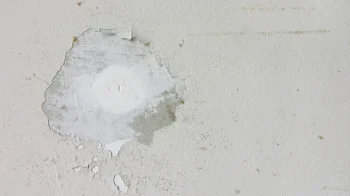
If the room already has peeling or suspicious discoloration, correct the underlying condition before applying a new coating.
You can learn more in Schneider Painting’s article about painting over mold or mildew.
The best bathroom coating is one selected for the actual room conditions and applied to a properly prepared surface.
9. Hallways Take More Abuse Than Most Homeowners Expect
Hallways may not seem like particularly demanding spaces.
In reality, they are some of the highest-contact walls in many homes.
People brush against them.
Children put hands on them.
Furniture gets moved through them.
Pets pass through repeatedly.
Corners and lower sections can accumulate marks faster than walls in larger rooms.
For those reasons, homeowners may want to move away from a very delicate flat finish in heavily used hallways.
Eggshell or satin can provide better cleaning performance while still maintaining an attractive wall finish.
The exact choice depends on lighting and surface quality.
A narrow hallway with strong side lighting can reveal imperfections that would be less noticeable in a larger room.
10. Children’s Rooms Benefit From Washable Paint
Kids’ rooms often see more wall contact than adult bedrooms.
Fingerprints, crayons, toys, furniture, and everyday play can leave marks.
A washable finish can make maintenance easier.
Eggshell may be enough for many children’s rooms.
Satin may make more sense in spaces that see heavy use or frequent cleaning.
That does not mean the room needs to look shiny.
Modern paint products can provide good durability without creating the high-gloss appearance homeowners may remember from older paints.
The best approach is to choose a product designed for the expected level of use.
11. Pets Can Influence Your Paint Finish Choice
Pets create their own set of interior maintenance considerations.
Dogs may rub against walls in hallways or near doors.
Cats can leave marks near corners.
Mud, water, and outdoor debris can end up on lower wall areas near entrances.
Homeowners with active pets may benefit from coatings that tolerate routine wiping.
Satin or a durable eggshell can make sense in those high-contact areas.
Paint color matters too.
Very dark walls can show certain dust, scratches, or marks more easily. Very light colors can reveal mud and dirt.
The right combination of color, sheen, and product can reduce maintenance without forcing homeowners to choose a finish they do not like.
12. Dark Paint Colors Can Make Sheen More Noticeable
Paint sheen becomes especially important with dark colors.
Deep blues, greens, charcoal tones, and other rich colors can reflect light differently than lighter neutrals.
Uneven roller application may become more noticeable.
Touch-ups can stand out.
Differences in surface texture may show more clearly.
This does not mean homeowners should avoid dark colors.
It means preparation and application technique become even more important.
A consistent substrate and professional rolling technique can help create a more uniform finish.
If you are considering a dramatic color change, it may also be worth discussing primer. Schneider Painting’s guide to when primer is needed before repainting explains when primer can help create a more consistent base.
13. Higher Sheen Highlights Wall Imperfections
One of the most important design considerations is wall condition.
Gloss reflects light.
Light reveals texture.
That means a higher-sheen finish can make imperfections easier to see.
Examples include:
- Drywall patches
- Nail pops
- Uneven sanding
- Previous roller marks
- Dents
- Scratches
- Texture changes
- Poor repairs
A homeowner may choose satin because it is easier to clean, then be disappointed when every wall defect becomes more visible.
That is not necessarily a problem with the paint.
The sheen is simply revealing what was already there.
If the walls are heavily damaged or uneven, repairs and surface preparation may be necessary before selecting a more reflective finish.
14. Lighting Changes How Paint Sheen Looks
Paint does not look the same in every room.
Natural light, recessed lighting, lamps, windows, and the direction of the light all affect how sheen appears.
A wall that looks almost flat in soft light may appear much shinier when direct sunlight hits it.
Side lighting is particularly good at revealing drywall and application defects.
Before choosing a finish, consider when and how the room is normally used.
A family room with large windows may react differently than an interior hallway with no natural light.
Paint samples can help with color, but sheen samples are useful too.
Seeing the actual finish on the wall provides better information than relying on the label alone.
15. Touch-Ups Are Easier With Some Finishes Than Others
Homeowners sometimes choose a finish based on the assumption that future touch-ups will be easy.
That is not always true.
Flat paint is often more forgiving when touched up because it reflects less light.
Higher-sheen finishes can show differences in application, especially if the original coating has aged.
Touch-up paint may dry with a slightly different sheen even when the color is identical.
Application method also matters.
A brushed repair can look different from a wall that was originally rolled.
When appearance is critical, repainting a full wall from corner to corner may create a better result than touching up an isolated patch.
16. Trim and Doors Need a Different Approach
Walls, trim, and doors should not automatically use the same finish.
Trim and doors receive frequent contact and often benefit from coatings designed for greater durability.
Semi-gloss remains a common option.
Some modern trim products also provide durable finishes at lower sheen levels.
The substrate and existing coating should be evaluated before repainting.
Older doors or trim may contain oil-based paint.
Applying a different coating directly over it without proper preparation can create adhesion problems.
Schneider Painting explains how to evaluate older coatings in how to tell if old paint is oil-based or latex.
17. Ceiling Sheen Is Usually Kept Low
Ceilings typically use flat or very low-sheen coatings.
There is a practical reason.
Ceilings often contain drywall joints, repairs, texture variations, and subtle irregularities.
A flatter coating reflects less light and makes those imperfections less noticeable.
There are exceptions.
Bathrooms, kitchens, and other specialty areas may require different product considerations.
The main takeaway is that homeowners do not need to use the same finish from wall to ceiling simply for consistency.
Each surface should have a finish appropriate for its use.
18. Do Low-VOC Paints Come in Durable Finishes?
Yes.
Homeowners sometimes assume that lower-VOC products are automatically less durable.
That is not a good general rule.
Paint performance depends on the specific product and formulation.
Many modern low-VOC and zero-VOC coatings are available in a range of sheens and durability levels.
If indoor air quality and odor are important considerations for your household, Schneider Painting’s guide to low-VOC and zero-VOC paints explains the topic in more detail.
Product selection should balance performance, appearance, room use, and homeowner priorities.
19. Preparation Still Matters More Than Sheen Alone
Choosing the perfect finish will not compensate for poor surface preparation.
Walls should be clean.
Loose paint should be removed.
Damage should be repaired.
Glossy existing coatings may require additional preparation.
Bare or patched areas may need primer.
Contaminants should be addressed before coating.
If those steps are skipped, even a premium satin or eggshell paint can perform poorly.
This is why professional interior painting services involve more than choosing a color and opening a can of paint.
The surface underneath the coating plays a major role in the final result.
20. A Simple Room-by-Room Approach
There is no rule requiring one sheen throughout the entire house.
In many homes, a practical approach looks something like this:
Ceilings: Flat or low sheen.
Low-use bedrooms and formal rooms: Flat, matte, or eggshell depending on product and homeowner preference.
Living rooms and family rooms: Matte, eggshell, or satin depending on activity level.
Hallways and children’s rooms: Durable eggshell or satin.
Kitchens and laundry rooms: Often satin or another washable finish appropriate for the product.
Bathrooms: A coating designed for humid interior environments, with sheen selected based on product and surface conditions.
Trim and doors: Durable trim coating, commonly satin or semi-gloss.
This is a starting point, not a strict formula.
The actual home should determine the final choices.
21. Why This Matters for Fayetteville Homes
Fayetteville includes a wide variety of housing.
There are older homes near established neighborhoods, newer construction, rentals, student housing, remodeled properties, family homes, and custom residences.
Each can have different painting needs.
An older home may have plaster, multiple coating layers, or oil-painted trim.
A newer home may have builder-grade flat paint that marks easily in high-traffic areas.
A rental property may prioritize cleanability and consistent maintenance.
A family home may need durable coatings in hallways, kitchens, and children’s spaces.
Homeowners looking for a house painter in Fayetteville, Arkansas should consider how the household uses each space rather than choosing the same finish everywhere by default.
Why Homeowners Choose Schneider Painting
Schneider Painting serves Fayetteville and communities throughout Northwest Arkansas.
Our interior painting approach begins with understanding how the homeowner uses the space.
A finish that makes sense in a quiet guest bedroom may not make sense in a busy hallway.
We evaluate surface condition, existing coatings, room use, lighting, cleaning needs, and the desired appearance before recommending a coating system.
Preparation is also a major part of our process.
We take the time to address appropriate repairs, protect surrounding surfaces, and prepare walls so the finish can look and perform as intended.
Communication matters throughout the project.
Homeowners should know what products are being used, why certain finishes are recommended, and what to expect during the work.
Our goal is not simply to put paint on the walls. It is to help homeowners make choices that fit the way they live.
Frequently Asked Questions
What is the best paint finish for a living room?
Eggshell is a popular option because it provides a balance of appearance and washability. Matte or satin may also make sense depending on the amount of traffic, lighting, wall condition, and specific paint product.
Is satin paint too shiny for interior walls?
Not necessarily. Satin has more sheen than eggshell, but many homeowners use it successfully in hallways, children’s rooms, kitchens, and other high-use areas. Surface imperfections may be more noticeable because satin reflects more light.
What finish is easiest to clean?
Higher-sheen coatings generally offer greater washability, but the specific product formulation matters. Modern matte and eggshell products can also provide good cleaning performance.
Should every room in my house use the same paint sheen?
No. Different rooms experience different amounts of moisture, traffic, cleaning, and contact. Using different finishes based on how each room functions can make more sense than applying one sheen throughout the house.
What finish should I use on baseboards and interior doors?
Satin and semi-gloss are common choices because trim and doors receive frequent contact and cleaning. The right coating should also be compatible with the existing surface.
Does Schneider Painting help Fayetteville homeowners choose paint finishes?
Yes. Schneider Painting can evaluate the rooms, existing surfaces, lighting, and homeowner preferences and recommend appropriate interior coating options for Fayetteville homes.
Conclusion
There is no single best paint finish for every room.
The right sheen depends on how the space is used.
Flat and matte finishes can provide a soft appearance in lower-traffic areas. Eggshell offers a practical balance for many living spaces. Satin can provide additional durability in busy rooms. Semi-gloss is often a strong choice for trim and doors.
But sheen is only part of the decision.
Wall condition, lighting, color, cleaning needs, moisture, existing coatings, and product quality all influence the final result.
For Fayetteville homeowners, the best approach is to choose finishes room by room instead of automatically using the same paint everywhere.
If you are planning an interior painting project and want help choosing the right colors, products, and finishes for your Fayetteville home, contact Schneider Painting to schedule a painting consultation.