Introduction
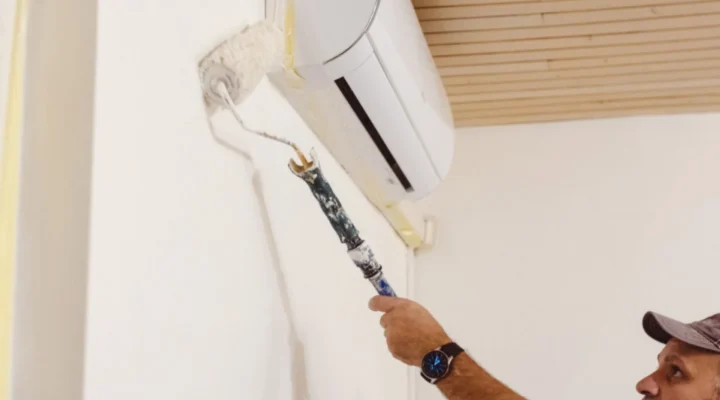
A window air conditioning unit creates an odd interruption in an otherwise straightforward window trim painting job, and it is a detail that is easy to either ignore or rush through carelessly. Learning how to paint around window AC unit trim carefully protects both your paint job and the AC unit itself.
Should the Unit Be Removed First
Removing a window AC unit entirely gives the cleanest access to the trim underneath and is the ideal approach when the unit is not currently needed for cooling. This is not always practical, especially if the unit is heavy, awkwardly installed, or still in active use during a project scheduled in warmer months, in which case careful masking becomes the more realistic option.
Masking the Unit Properly
If the unit stays in place, covering it completely with plastic sheeting and painter’s tape protects both the exterior housing and the internal components from paint and cleaning solution. Special attention should go toward sealing any gaps where the unit meets the window frame, since these openings are exactly where overspray or drips tend to find their way onto surfaces you did not intend to paint when you paint around window AC unit trim.
Caulking and Prepping the Trim Like Any Window
The trim surrounding a window AC unit should be prepped the same way as any other window opening, with old caulk removed and replaced using a quality paintable caulk. DAP’s own caulk application guidance recommends taping both sides of a joint before applying a fresh bead, which produces a clean, straight line once the tape is pulled. This step matters just as much around an AC unit opening as it does around a standard window, since gaps here let moisture and pests into the wall just as easily.
Keeping Paint Away From Vents and Moving Parts
Paint or overspray that gets into an AC unit’s exterior vents, condenser fins, or drainage areas can affect its performance and is difficult to fully clean out once dried. This is one of the more important reasons to mask thoroughly rather than trying to paint quickly around an operating unit, since even small amounts of paint in the wrong spot can create ongoing maintenance headaches for the appliance itself.
Timing the Project Around AC Usage
If possible, scheduling exterior trim work around a stretch when the unit is not actively needed, such as a mild spring or fall day, makes the whole process easier and reduces any temptation to rush the masking to avoid disrupting cooling. For units that genuinely cannot be turned off during the project, coordinating with the painting crew about timing and duration helps minimize any inconvenience.
What to Discuss With Your Painting Contractor
Before work begins, it is worth asking how the crew plans to handle the specific unit at your home, since window AC units vary widely in size, mounting style, and how easily they can be temporarily removed. A contractor who asks about this detail upfront, rather than discovering it on site, is more likely to have a clear plan that protects both the trim and the appliance.
Addressing Rust or Wear Around Older Units
Window AC units that have been in place for years often leave behind rust stains or minor corrosion on the surrounding metal flashing, since condensation and weather exposure concentrate right at that opening. Addressing this staining with appropriate rust treatment before painting prevents it from bleeding through the new topcoat and reappearing within a short time.
Checking that the surrounding sill and trim have not developed wood rot from years of condensation drainage is also worth a quick inspection, since this is a spot that can hide moisture damage behind an otherwise normal looking painted surface.
Frequently Asked Questions
Can a window AC unit be painted the same color as the trim?
Painting the unit itself is generally not recommended, since it can affect ventilation and voids most manufacturer warranties.
How long should caulk cure before an AC unit is reinstalled?
Most paintable caulks need at least a few hours to skin over, though checking the specific product’s instructions is the safest approach.
Does masking an AC unit affect its cooling during a project?
Temporary masking for the duration of active painting typically does not affect performance once removed promptly after the work is finished.
Is it worth removing the AC unit for a full exterior repaint?
For a full exterior project, temporary removal often makes sense and gives painters complete access to the trim and surrounding siding.
Can rust around an AC unit opening be repaired during painting?
Yes, any rusted metal flashing or trim around the unit should be addressed with proper rust removal and primer before painting, just like any other metal surface.
What should be done with the AC unit’s drain line during painting?
The drain line should be checked to make sure it remains clear and unobstructed by masking material once the project is finished.
What happens if paint gets on the AC unit despite masking?
Small amounts can often be carefully cleaned with an appropriate solvent shortly after application, though it is much better to prevent the issue with thorough masking in the first place.
Do all window AC units have the same mounting style?
No, mounting styles vary by unit and window type, which is why a painting crew should assess each unit individually before deciding on the best masking or removal approach.
Should the trim color match the AC unit’s housing color?
Not necessarily, since most AC units are left unpainted and simply masked, allowing the trim color to be chosen independently of the unit’s appearance.
Conclusion
A window AC unit does not have to complicate your exterior painting project when it is handled with the right care. Our crews mask and prep carefully every time they paint around window AC unit openings, protecting both your home and your equipment. Contact us for a free estimate on your next exterior project.