Introduction
Windows and doors are some of the most visually prominent details on a home’s exterior, and they are also some of the trickiest areas to paint cleanly. A sloppy edge around a window frame or door casing stands out immediately, even when the rest of the paint job looks great, which is why technique matters so much in these specific areas.
Prep Work That Makes the Biggest Difference
Before any paint goes on, gaps between the window or door frame and the surrounding siding should be caulked to create a clean, sealed edge. DAP’s own caulk application guidance recommends applying painter’s tape along both sides of a joint before caulking, which helps produce a straight, professional looking line once the tape is removed. Skipping this step often leads to uneven caulk lines that are difficult to hide once paint is applied over them.
Masking Glass and Hardware Properly
Painter’s tape applied directly to window glass, along with plastic sheeting or paper over larger glass panes, protects against drips and overspray. Door hardware, including hinges, knobs, and locks, should either be removed entirely or carefully masked, since paint buildup on moving hardware can cause doors to stick or hinges to bind over time.
Cutting In a Clean Line by Hand
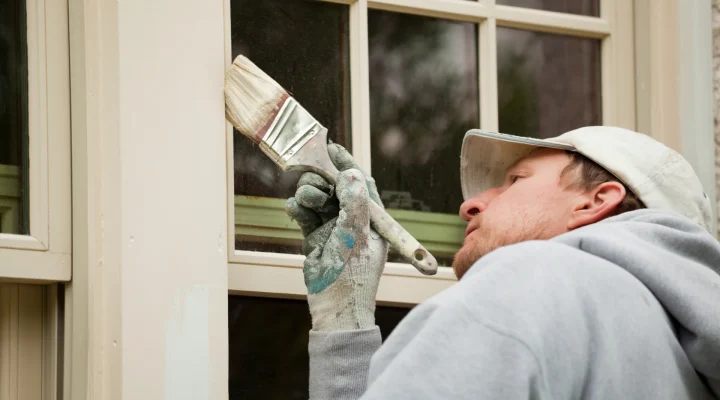
The technique to paint around windows doors cleanly starts with cutting in, which means using a smaller angled brush to paint a precise line along the edge of the trim before rolling the broader wall surface. A steady hand and a good quality angled sash brush make a bigger difference here than most other tools in the painter’s kit, since this line is often viewed up close by anyone standing near a front door or window.
Working in the Right Order
Most professional painters trim and cut in window and door frames before rolling the surrounding siding, which allows the wall color to be rolled right up to the freshly cut trim line while it is still workable. Painting in the reverse order often leads to more visible seams where the two colors meet, since the trim paint has to be carefully worked around already dried wall paint instead.
Common Mistakes to Avoid
Rushing the tape removal before paint has set enough to hold a clean edge is one of the most common mistakes, since pulling tape too early can drag wet paint and leave a ragged line. Overloading the brush is another frequent issue, since too much paint on a small brush leads to drips and pooling in tight corners around window and door frames. Taking a little extra time in these detail areas pays off far more than rushing through them to get to the larger, easier wall sections.
Why This Detail Work Takes Longer Than It Looks
Homeowners are often surprised at how much of a project’s total time goes toward the careful work needed to paint around windows doors correctly, even though these areas make up a small fraction of the total wall surface. A typical home might have a dozen or more windows and several doors, and each one requires the same careful masking, cutting in, and cleanup regardless of size, which adds up across a full exterior project.
We factor this detail time into every estimate upfront, since a home with many small windows or an ornate door surround genuinely takes longer than a similar sized home with simpler window styles and fewer openings.
What a Finished Detail Area Should Look Like
On a well executed job, the line between trim and siding color should be crisp and consistent all the way around every window and door, with no visible drips on glass or hardware and no ragged tape lines. This level of consistency across every opening on a home is one of the clearest indicators of a careful, professional paint job versus a rushed one.
We photograph these detail areas during our final walkthrough on every project, since they are often the first thing homeowners and visitors notice up close, even if the broader wall sections technically make up more of the total painted surface.
Frequently Asked Questions
Should you tape or freehand cut in around windows?
Both methods work well in skilled hands, though tape offers more consistency for less experienced painters, especially on intricate trim details.
When should painter’s tape be removed?
Tape should generally be removed while the paint is still slightly tacky rather than fully dry, which produces the cleanest line without pulling at set paint.
Does caulk need to dry before painting over it?
Yes, most paintable caulks need at least a couple of hours to skin over before paint is applied, though full manufacturer cure times vary by product.
How do you prevent paint drips on window glass?
Using an angled sash brush with controlled amounts of paint, combined with tape or a straight edge tool along the glass, helps minimize drips significantly.
Should door hardware be removed before painting?
Removing hardware when possible gives the cleanest result, though careful masking is a reasonable alternative when hardware cannot easily be taken off.
How long should you wait before washing newly painted trim?
Most paints benefit from at least two to three weeks of cure time before washing, even though they feel dry to the touch much sooner.
What size brush works best for cutting in around trim?
A two to two and a half inch angled sash brush is the standard choice for most window and door trim detail work.
What if a window frame has multiple panes with thin muntins?
Multi-pane windows with thin dividers require extra patience and often a smaller brush, since each individual muntin needs the same careful cutting in as a full frame.
Conclusion
Clean, crisp lines around windows and doors are one of the clearest signs of a quality paint job, and they come down to patience and the right technique more than any special product. Our crews take extra time to paint around windows doors carefully on every project we complete for homeowners throughout the region. Request a free estimate and see the difference careful detail work makes.