Introduction
Lap marks, those visible streaks or bands where one painted section overlaps another, are one of the most common complaints we hear about DIY and even some rushed professional paint jobs. They are also one of the more preventable problems in exterior painting once you understand what actually causes them.
What Causes Lap Marks in the First Place
Lap marks happen when a painted edge starts to dry before the next section is applied and blended into it. Sherwin-Williams’ own application guidance notes that overlapping occurs when a freshly painted section begins to dry before the adjoining area is painted, leaving a visible line where the two applications meet rather than blending into one smooth coat. Once that edge sets, no amount of careful rolling afterward will fully hide the seam.
Keeping a Wet Edge
The core technique to prevent lap marks siding problems is maintaining what painters call a wet edge, which means always working into paint that is still wet rather than reworking an area that has started to dry. This requires painting in a logical, continuous sequence, such as top to bottom in manageable sections, rather than jumping around the house or leaving large gaps to fill in later.
Why Section Size Matters
Trying to cover too much wall at once, especially alone or in hot weather, often backfires because the first section dries before you can get back to blend the next one in. Working in smaller, deliberate sections, one or two siding courses at a time on lap siding for example, keeps the wet edge manageable and gives you enough time to blend each new section into the previous one before it sets.
How Weather and Timing Affect Lap Marks
Hot, sunny conditions dramatically shorten the window you have to blend sections before the edge dries, which is why lap marks are more common on projects painted in direct afternoon sun during summer. Working the shaded side of a house first and chasing the shade around the property throughout the day, rather than painting whichever side happens to be convenient, gives you more working time and a better chance of a lap free finish.
Application Technique That Helps Blend Sections
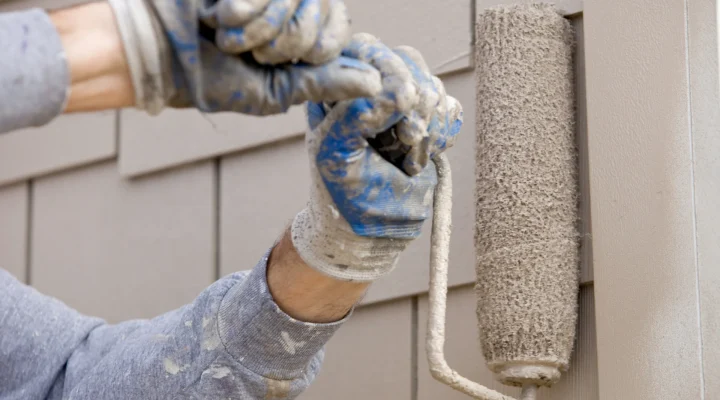
Maintaining consistent pressure and overlap with each pass of the roller or brush, generally overlapping the previous stroke by a few inches, helps distribute paint evenly and reduces the visibility of any seams that do form. Spraying with a back roll, where a sprayed section is immediately rolled while still wet, is another common professional technique that helps blend coverage and further reduce the appearance of lap marks compared to spray alone.
Why Crew Coordination Matters on Larger Homes
On a larger home with multiple painters working at once, coordination becomes just as important as individual technique to prevent lap marks siding issues from showing up where two crew members’ sections meet. Experienced crews communicate about where each person is working and time their sections so the seams between them stay wet and blend together, rather than each painter working independently and creating visible lines at the boundaries.
Why We Train Our Crews on This Specifically
Lap marks are one of the most common quality issues we train new crew members to watch for, since the underlying causes are avoidable but easy to overlook when a job is moving quickly. We build section sizing and sun tracking into our project planning rather than leaving it up to each individual painter’s judgment in the moment, which keeps results consistent across every home we work on regardless of size or layout.
A final walkthrough in bright, angled light at the end of every project also helps catch any subtle lap marks before we consider the job complete, giving us a chance to correct them while the crew and equipment are still on site.
Frequently Asked Questions
Can lap marks be fixed after the paint dries?
Sometimes a full additional coat can even things out, but true lap marks caused by dried edges often require going back over the entire section rather than a small touch up.
Does paint quality affect lap marks?
Yes, some paints are formulated with better open time and self leveling properties, which gives painters a bit more working time before an edge sets.
Is spraying less likely to cause lap marks than rolling?
Spraying can reduce lap marks when combined with back rolling, but spray alone can still show overlap patterns if sections are not blended while wet.
Why do lap marks show up more on dark colors?
Darker colors tend to show subtle sheen and texture differences more visibly than lighter colors, which can make lap marks more noticeable even when the technique was reasonably careful.
How can I tell if my painter used proper technique to avoid lap marks?
Inspect the finished siding at an angle in bright light, since lap marks typically show up as subtle striping or banding that catches the light differently than the surrounding area.
Does the type of siding affect how easily lap marks show?
Yes, smooth siding tends to show lap marks more readily than textured siding, which naturally helps disguise minor application inconsistencies.
Does temperature affect how fast an edge dries?
Yes, hotter and drier conditions shorten the working time significantly compared to milder, more humid days.
Should touch ups be done with a brush or roller to avoid new lap marks?
Matching the original application tool and technique as closely as possible gives the best chance of a seamless touch up without creating a new visible edge.
Is it harder to prevent lap marks on a hot day?
Yes, heat shortens the open time of paint significantly, making a wet edge much harder to maintain without adjusting section size and timing.
Conclusion
A smooth, even exterior finish comes down to technique and timing as much as the paint itself. Our crews plan every project around the sun’s path and work in sections designed to prevent lap marks siding problems before they start. Request a free estimate and see the difference a properly sequenced application makes.