Introduction
Garage floors take a beating that no other painted surface in the house has to deal with, from hot tires and dropped tools to spilled oil and road salt tracked in during the winter. When homeowners in Bentonville and Rogers ask us for garage floor recommendations, the epoxy vs paint garage floor question comes up almost every time. Here is how the two options actually compare.
How Standard Garage Floor Paint Performs
Garage floor paint is typically a concrete specific acrylic or latex product, often combined with a primer in one step. It is the most budget friendly option, easy to apply with a roller, and available in a wide range of colors. The tradeoff is durability. Standard paint holds up reasonably well to foot traffic and light use, but it is more prone to peeling under hot tires, and chemical spills like oil or gasoline can damage the finish if not cleaned up quickly.
How Epoxy Coatings Perform Differently
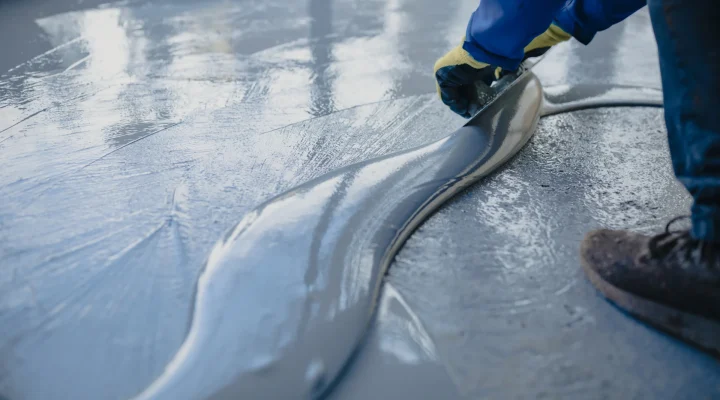
Epoxy is a two part coating that chemically cures into a much harder, thicker film than standard paint. Rust-Oleum’s own guidance on choosing a garage floor coating notes that epoxy resists hot tire pickup, chemical spills, and stains significantly better than paint, which is why it holds up well in garages that see daily vehicle use. It also creates a glossy, showroom style finish that many homeowners prefer for the appearance alone, separate from the added durability.
The tradeoff with epoxy is a more involved application process, including etching or grinding the concrete to help the coating bond properly, and a longer cure time before the floor can handle vehicle traffic.
Cost Differences Between the Two Options
Standard garage floor paint costs less per square foot in materials and generally takes less time to apply, which keeps labor costs down as well. Epoxy systems cost more upfront due to both material price and the additional surface prep required, but the added durability often means fewer touch ups and a longer stretch before the floor needs attention again, which can close some of that cost gap over the life of the coating.
Surface Prep Matters More Than the Product Choice
Regardless of which option you choose, the biggest factor in how long a garage floor coating lasts is how well the concrete was prepared beforehand. Oil stains, sealers, and even fine dust left on the surface can prevent proper adhesion, leading to peeling within months no matter how good the product is. Etching or mechanically profiling the concrete opens up the surface enough for either paint or epoxy to bond correctly, and skipping this step is one of the most common reasons DIY garage floor projects fail early.
Which Option Makes Sense for Your Garage
For a garage used mainly for storage or light workshop tasks, standard paint is often a perfectly reasonable choice that keeps costs down. For a garage that sees daily vehicle traffic, doubles as a workspace with dropped tools and chemicals, or functions as a home gym or hangout space, the added durability of epoxy is usually worth the higher upfront cost. We walk through how the space is actually used before recommending one option over the other, since the right answer in the epoxy vs paint garage floor decision really does depend on daily habits, not just personal preference.
Maintenance Differences Once the Coating Is Down
Standard paint is easier to touch up in small sections if it chips or wears in a specific spot, since you can simply clean the area and apply a bit more paint that blends reasonably well. Epoxy is more difficult to spot repair, since new epoxy does not always bond seamlessly to cured epoxy, which sometimes means a full recoat is the more practical fix rather than patching a small area. This maintenance difference is worth factoring into the decision alongside the upfront cost and durability comparison.
Both surfaces benefit from regular sweeping and prompt cleanup of spills, which extends the life of either option regardless of which one you choose.
Our Recommendation for Most Homeowners
When homeowners ask us to settle the epoxy vs paint garage floor debate for their specific situation, we generally lean toward epoxy for any garage that regularly houses a vehicle, simply because the resistance to hot tire pickup and chemical stains pays off over time. For secondary garages, workshops without daily vehicle use, or budget constrained projects, standard concrete paint remains a solid, cost effective choice that still meaningfully improves the look and cleanability of the space.
Frequently Asked Questions
Is epoxy garage floor coating worth the extra cost?
For garages with daily vehicle traffic or heavy use, epoxy’s added durability against tire pickup and chemical spills often justifies the higher price.
How long does epoxy last on a garage floor?
A properly applied epoxy coating can last 10 years or more, depending on traffic and how well the concrete was prepared before application.
Can you apply epoxy over old garage floor paint?
In most cases the old paint needs to be removed or thoroughly sanded first, since epoxy needs a properly profiled surface to bond well.
Does garage floor paint peel under hot tires?
It can, especially with standard one part paint, which is one of the main reasons epoxy is preferred for garages with regular vehicle use.
How long before you can park in the garage after epoxy?
Most epoxy coatings need about three days before they can handle vehicle traffic, though light foot traffic is often fine sooner.
Can you epoxy a garage floor with cracks?
Minor cracks can often be filled as part of the prep process, but significant structural cracks should be evaluated before coating to avoid the repair failing early.
Conclusion
Choosing between paint and epoxy for your garage floor comes down to how the space is used and how much durability you actually need. Our crews serve homeowners throughout the area, including Fayetteville, Springdale, and Bella Vista, and can walk you through which option fits your garage and your budget. Contact us for a free assessment before your next project.