Introduction
A wood fence takes a beating from sun, rain, and temperature swings all year long, which means the restain fence frequency question comes up a lot from homeowners trying to plan their outdoor maintenance budget. Here is what actually determines how often your fence needs attention.
The General Timeline for Restaining
Most quality penetrating stains on a wood fence hold up for 2 to 3 years before they need to be reapplied. Behr’s exterior wood stain line publishes protection estimates of up to 8 years on fences and siding for their solid color formulas, though real-world Arkansas conditions with heavy sun and humidity typically shorten that window. This timeline assumes a reasonably maintained fence without major sun exposure issues or ground contact problems. Fences that sit in constant shade can sometimes stretch closer to 4 years between coats, while fences in full sun exposure on the south or west side of a property often need attention closer to the 2 year mark.
Why Sun Exposure Matters So Much
UV rays break down the protective oils and pigments in stain faster than almost any other factor. A fence line that runs east to west, with one side facing full southern sun most of the day, will often need restaining on that side well before the north facing side shows any wear. It is common for us to find one section of a fence needing full attention while a shaded section 20 feet away still looks fine.
How Ground Contact Speeds Up Deterioration
Fence posts and the bottom few inches of pickets that sit close to grass or mulch absorb moisture from the ground, which accelerates wood breakdown regardless of how well the rest of the fence is maintained. Keeping grass trimmed away from the base of the fence and avoiding mulch piled directly against wood posts helps extend the life of your stain job across the whole structure.
Signs Your Fence Needs Restaining Now
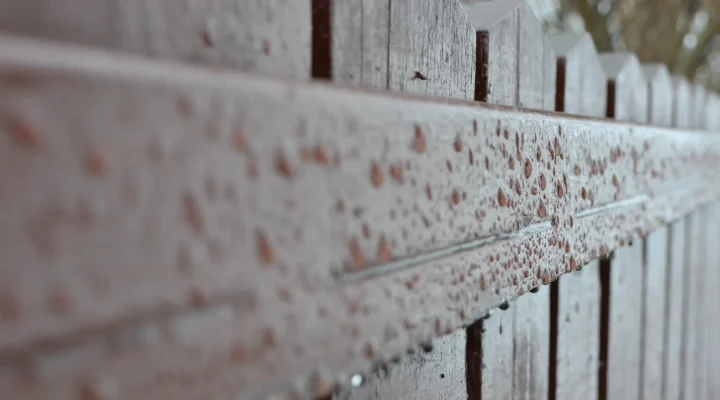
Water that no longer beads on the surface and instead soaks in immediately is the clearest sign the protective coating has worn through. Graying wood, visible dryness or splitting, and a chalky texture are all additional signs that it is time for a fresh coat before the wood starts to degrade structurally rather than just cosmetically.
A simple water test takes less than five minutes. Splash a small amount of water on a few different sections of the fence and watch whether it beads up or soaks in immediately, which gives a quick, reliable read on the coating’s current condition.
Planning Your Fence Maintenance Schedule
Because full sun sections wear faster than shaded ones, it often makes sense to plan on the more frequent end of the range, closer to every 2 years, rather than waiting for the whole fence to look worn. Staying ahead of the schedule also means less prep work each time, since you are refreshing a coating rather than restoring badly weathered wood.
How Fence Material Affects the Timeline
Cedar and other naturally rot resistant woods tend to hold stain slightly longer than treated pine, which is one reason the restain fence frequency can vary even between two fences of similar age and sun exposure. Treated pine is more affordable upfront but generally needs attention closer to the 2 year mark, while cedar can sometimes stretch closer to 3 years under similar conditions.
Fence style matters too. Solid privacy fences with wide, flat boards show wear differently than picket style fences with more exposed edge grain, which tends to absorb and lose moisture faster than a flat board face.
Stain color also plays a small role. Darker, more pigmented stains generally offer slightly better UV protection than clear or lightly tinted products, which can add a modest amount of extra life between coats on sun exposed sections.
Neighboring Fence Sections and Shared Property Lines
Fences shared along a property line sometimes get maintained by two different households, which can lead to uneven wear if only one side keeps up with staining. Coordinating with a neighbor on timing, even informally, can help keep both sides of a shared fence looking consistent and protected rather than one section fading years ahead of the other.
Gate hardware and hinges deserve a quick check during any restaining project too, since sagging gates put extra stress on the surrounding fence posts and can accelerate wear in that section specifically. A five minute hardware check while the stain dries is an easy habit that pays off over the life of the fence.
Corner posts and end posts also tend to wear faster than mid span sections, since they take stress from gate swings and ground movement that flatter sections of fence never experience.
Frequently Asked Questions
How do I know if my fence needs to be restained?
If water no longer beads on the surface and instead soaks in, or the wood looks gray and dry, it is time for a fresh coat.
Does fence direction affect how often it needs staining?
Yes, south and west facing sections that take direct sun typically need restaining more often than shaded north facing sections.
Can you restain a fence without stripping the old coat?
In most cases yes, as long as the old coat is not peeling, a light cleaning and fresh coat of stain is enough.
What is the best season to restain a fence in Arkansas?
Spring and fall generally offer the mild, dry conditions that allow stain to properly penetrate and cure.
Is it worth restaining a fence that is already old?
As long as the wood itself is structurally sound, restaining is usually far cheaper than fence replacement and extends its life significantly.
Does fence height affect how often it needs restaining?
Taller privacy fences generally take more direct sun and wind exposure per panel, which can shorten the time between restaining compared to shorter picket fences.
Conclusion
Staying ahead of your fence’s maintenance schedule protects your investment and keeps prep work manageable each time. Our crews can assess your fence’s current condition, recommend a realistic restain fence frequency based on its sun exposure and material, and get it back on a healthy maintenance cycle. Contact us if your fence is due for a fresh coat, and we will give you a straightforward timeline to plan around.